Home. Background. Countries. Publications. Activities. People.

Dr Salomão Bandeira

Salomão Bandeira was born on 17 September 1965 at Maxixe, west of Inhambane Bay, in southern Mozambique, an area of coastal mosaic vegetation interspersed with coconut tree plantations. The area, including the bay, has extensive mangroves and seagrass beds. He spent most of his childhood at Gondola, a railway village in central Mozambique, which consists primarily of miombo and mixed woodland. When Salomão went out to cultivate the family fields or walked to school, or explored the surrounding areas during his free time, he was already observing the natural world around him, eager to learn all he could about it. During school holidays, his father, a railway worker, used to take him and his brother per cargo train to the Beira Corridor. There the scenery was different and this further stimulated his interest in natural history. His interest in marine biology was born after he moved to Maputo, aged 14. He was fascinated by the city shoreline, by the island of Inhaca out in the Bay of Maputo, and by Bilene, a coastal town several hours to the north.

Education

Salomão received his primary education in Beira and Gondola (1972-1976) and attended secondary school in Chimoio and Maputo (1977-1984). In 1992 he finished his 5-year Licenciatura at the University Eduardo Mondlane (UEM), Department of Biological Sciences. His thesis was on seagrass taxonomy and distribution at Inhaca Island. He was one of the first biology graduates in the country. As a result of his excellent performance as a student, he succeeded in getting a position as a junior lecturer at Universidade Eduardo Mondlane. Salomão’s career as a professional botanist began in the late eighties when Dr Jan de Koning (currently Director of the Leiden Botanic Gardens in the Netherlands) supervised his studies in basic herbarium techniques, plant collecting, and seagrass taxonomy. Inhaca Island, a place rich in history and relatively unspoiled, provided the ideal opportunity for fieldwork, as it was a safe location during the civil war in Mozambique. This choice of location steered Salomão’s studies in the direction of marine botany. At the time there was a capacity-building project funded by SIDA (Swedish International Development Agency) that took place in cooperation with the government of Mozambique. SIDA funded graduate work in the marine sciences. As a result, Salomão was selected to enroll in the Master of Science program at Gothenburg University in Sweden. After having successfully acquired his M.Sc. degree in 1994, he was pleased to be selected for the PhD program in the Department of Marine Botany at Gothenburg. In 2000 he successfully defended his PhD thesis on seagrass diversity and ecology and was awarded a doctorate. He was one of the few people who recognised the importance of seagrass ecosystems, a research field that today is considered one of the most important for coastal zone management in the tropics.

A Rich Career

During Dr Bandeira’s studies for his PhD, he was fully engaged in an evolving career in the Department of Biological Sciences, Universidade Eduardo Mondlane. In 2000 he was elected Chairman of the Department of Biological Sciences, a position he held till 2003. In 2002 he was promoted to assistant professor in botany. Dr Bandeira’s marine botany research focused mainly on seagrasses, but at the same time he also worked with seaweeds, mangroves, and various aspects of terrestrial botany. The contributions by Dr Bandeira in these fields have been recognised internationally, and are often quoted in the scientific press. In total, Dr Bandeira has published over 18 papers in the field of marine botany, as well as several papers in terrestrial botany. Dr Bandeira is a very active international researcher, who has supervised several BSc and MSc students. He currently coordinates several international research programmes funded by the European Union, Swedish Sida, The Netherlands (NUFFIC) and others.

Versatility

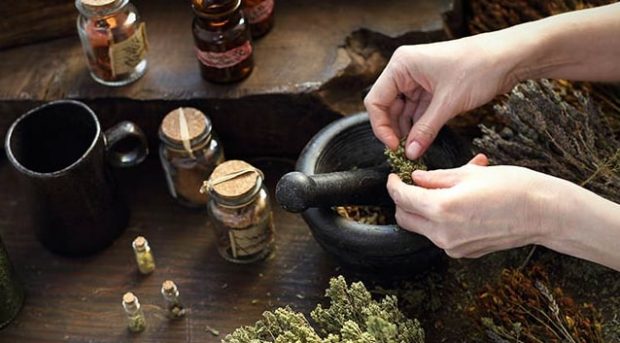
While Dr Bandeira has become an authority on marine botany, including the macroalgae, seagrasses, and mangrove communities, he also has a broad expertise in terrestrial and inland aquatic botany. Although a taxonomist by training, he approaches botany from many different perspectives and this is reflected in his various projects and publications. One of Dr Bandeira’s special interests in terrestrial botany is that of traditional medicine. He has been involved in gathering information (and in training others to do so) on traditional medicinal practices, the systems of harvesting, preparing, distributing and marketing plant-based medicines. He has researched the impact of these activities on biodiversity, and how to respond to the problem of over-harvesting. He has published several articles on the topic. Related to this is a general interest in traditional folklore regarding plants, and also in their vernacular names.

Subjects of early interest for Dr Bandeira included the non-medicinal uses of plants, the impact that collecting them has on the environment, and how to encourage sustainable conservation practices. In addition to deforestation, he is concerned about degradation of other vegetation communities, including through unsustainable agriculture practices. He has a special interest in the intricacies of how abandoned fields regenerate over time.

A Tremendous Task

Dr Bandeira’s interest in marine botany naturally led to a growing interest in inland aquatic botany and he has recently been involved, through the university, in taking an inventory of fresh water plants in various rivers in the Maputo Province.

Dr Bandeira has a particular interest in threatened species and has been known to refuse to collect a specimen if he sees only one. He realises that controlling the threat to rare and over-collected species is very difficult anywhere, but shares a determination with other local botanists to try to monitor the situation as well as possible.

Much of the flora of Mozambique is poorly surveyed and Dr Bandeira has been organising expeditions to the least well-known areas of botanical interest. He has also been involved in managing the herbarium at UEM, in making many improvements there, and in overseeing the ongoing updating of the curation of specimens.

An Inspired Vision!

Not intimidated by big projects, Dr Salomão Bandeira has been a driving force behind the regeneration of the university botanical garden, which had been used for cultivating food during the civil war. Through UNESCO he has been able to find funding to develop the garden, taking a personal role in redesigning it, and in restocking the plant beds through collections made on expeditions around the country. He was co-author of two pamphlets about the garden, and a brochure entitled O Jardim Botánico Universit·rio de Maputo e a Conservação das Plantas Medicinais e Plantas Ameaçadas. Through these publications he has aimed to promote his ambitions for the development of the garden as a resource for the general public. It is his dream that the garden will house an education centre, a medicinal plant conservation centre, and be a place of peace and beauty at the edge of the city.

Approachable

As an assistant professor, Dr Salomão Bandeira has been involved in improving the technique of teaching botany at UEM, and in promoting research, publishing and other professional development among the staff. One of the highlights of his career was the co-organisation of an exhibit in Maputo, held for the King and Queen of Sweden, in 1998. The exhibit focussed on the marine biology program and the Marine Biological Station of Inhaca Island.

As a teacher, he is popular and well respected, yet approachable.

International Involvement and Publications

For his professional development Dr Salomão Bandeira has taken advantage of various conferences and workshops, including as a participant, in Africa, Australia, Europe and the USA. In 1997, at the AETFAT Congress in Harare, Dr Bandeira co-chaired a symposium on “Plant Resources and Sustainable Development”.

In the field of terrestrial botany, his publications have focused on aspects of plant diversity and utilisation, conservation, medicinal plants and ecology. Topics include the diversity and uses of plant species at Goba in the Lebombo Mountains; non-medicinal plant uses on Inhaca Island; African ethnobotany and healthcare, especially in Mozambique; and the ecology and conservation status of plant resources in Mozambique. He has been involved in several consulting projects throughout the country. He is currently co-authoring two books. The first, with D.Bolnick, entitled “A Guide to Wild Flowers of Southern Mozambique / Flores Nativas do Sul de Moçambique”, will cover over 300 species. The second book, is co-authored with H.Beentje: “A Field Guide to the Mangroves of Africa and Madagascar”. Dr Bandeira is particularly interested in the genus Ceropegia, and in the plant families Amaryllidaceae, Malvaceae and Iridaceae.

It Runs in the Family!

Dr Bandeira’s wife, Romana, has a PhD in entomology and also lectures at UEM. Their young daughter, Ambar, loves to go hiking in the bush with her parents. She already has an interest in wild flowers. By the time you read this article, Ambar may have a little sister….

—D. Bolnick, M. Björk & F. Barbosa

SABONET News 8.2: 73

Back to list.


SABONET.
Southern African Botanical Diversity Network.