The National Herbarium of Malawi
History
The first herbarium in Malawi was established
in Zomba in the 1930s by the Agriculture Department, Division of Plant Pathology,
to keep records of hosts of fungal crop parasites. It was later transferred
to Chitedze Agricultural Research Station in Lilongwe. In 1956, the Department
of Forestry established another herbarium in Zomba to facilitate silvicultural
research, which was later transferred to Chongoni Silvicultural Research Station
in Dedza. In 1966, the University of Malawi established a teaching and research
herbarium at Chichiri Campus and inherited all specimens from the Agricultural
Herbarium. The University Herbarium was transferred to Zomba in 1973 when
the University moved to its present campus at Chancellor College. In the 1970s
the Government of Malawi realised that there was a great need to establish
a herbarium that could house a comprehensive information bank on the flora
of Malawi. The Government requested the Royal Botanic Gardens, Kew, to conduct
a feasibility study on the establishment of a national center for the assemblage,
curation, classification, and research of the flora of Malawi. The study recommended
a merger of the University and the Forestry herbaria to form a National Herbarium.
In 1975, the collections of the two herbaria were combined in a single building.
In addition, the study recommended that the
botanic gardens and the National Herbarium should be under the management
of the same organisation. The Government of Malawi therefore established the
National Herbarium and Botanic Gardens of Malawi (NHBG) as an independent
national botanical organisation under an Act of Parliament in 1987.
Plant Collections
The National Herbarium contains over 110,000 plant specimens, including
macrofungi, bryophytes, pteridophytes, and lichens collected all over Malawi.
The herbarium is divided into three sections: Dicotyledons, Monocotyledons,
and Cryptogams. The specimens are arranged in alphabetical order according
to families, genera, and species. G. Jackson, J. Pawek, J.D. Chapman, R.K.
Brummit, A.J. Salubeni, E.A.K. Banda, and I.H. Patel collected most of the
specimens in the National Herbarium (MAL).
Activities and Services
The NHBG has the following core activities:
Collecting
and preserving plant specimens
Collecting
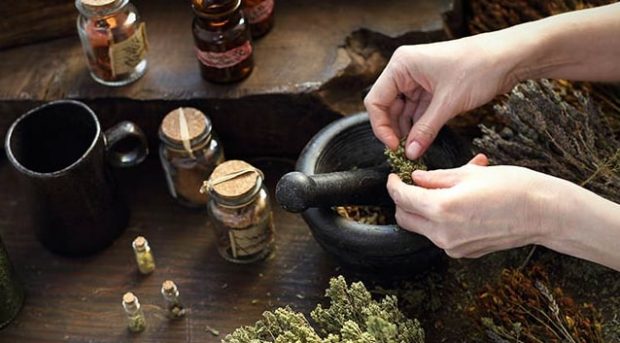
and disseminating ethnobotanical information,for example, medicinal plants
and botanical pesticides
Systematic
botany research
In
situ and ex situ conservation
Vegetation
surveys
Environmental education
Identification
services
Funding
The NHBG is a fully-funded, non-profit-making Government organisation.
To assist the Government of Malawi in implementing the Convention on Biological
Diversity, the NHBG is coordinating and participating in the following biodiversity
related projects:
SABONET (Southern African Botanical Diversity
Network) 1998–2002
A regional capacity building project funded by the Global Environment
Facility (GEF) and implemented by UNDP. Through SABONET, NHBG has acquired
equipment and knowledge in herbarium management, environmental impact assessment,
botanical illustration, systematics, computer management, Red Data Listing,
and plant identification.
NORAD Biodiversity Support Programme 2001–2005
This project is funded by NORAD and aimed at contributing towards sustainable
conservation, management, and utilisation of biodiversity in Malawi. The project
endeavors to strengthen Malawi’s capacity to contribute and implement biodiversity
projects at national and regional levels and to implement the National Biodiversity
Strategy and Action Plan.
Biodiversity of Southern African (Monocotyledonous)
Plants: Taxonomy, Conservation and Use 2001–2006
This project was developed in collaboration with the University of Oslo
and University of Zimbabwe and is aimed at enhancing research and capacity
building in taxonomy and understanding of plant biodiversity. The project
will help Malawi to produce high-caliber staff in the field of taxonomy. The
project is funded by NUFU (the Norwegian Council of Universities; Programme
for Development Research and Education for consideration).
Sustainable Management of Natural Resources
in Protected Areas of Malawi 1998–2001/2
This project on biodiversity conservation in protected areas is funded
by GTZ and is aimed at sustainable use of biodiversity through the involvement
of people. The project will produce an inventory of natural resources in the
protected areas of Mwanza, Ntchisi, and Misuku, develop strategies for sustainable
use of selected taxa, and disseminate the importance of biodiversity conservation
through meetings.
PROTA (Plant Resources of Tropical Africa)
2001–2002
PROTA is an international project aimed at providing an up-to-date information
system on the plant resources of tropical Africa, assembling all available
information, and covering all existing knowledge. For wide distribution of
the information, the project will be using both electronic and printed media.
PROTA was developed by Wageningen Agricultural University, Netherlands, and
is funded by the European Union. PROTA has established a regional office for
southern Africa at the NHBG.
Literature
The National Herbarium and Botanic Gardens of Malawi has a specialist
library, which contains more than 3,000 accessioned books. The library is
well equipped to enable researchers to conduct basic research in plant sciences
and is open to the general public. The NHBG library has received book donations
from SABONET and Kew Gardens, UK.
Staff and Research Interests
General Manager:
Prof. J.H. Seyani (systematics of Dombeya; on secondment to Commonwealth
Science Council, London, UK)
Herbarium Curator:
Dr A.C. Chikuni (systematics of Brachystegia and other Caesalpinioideae
genera)
Scientific staff:
Mr M.L. Mwanyambo (ethnobotany—medicinal plants)
Mr Z. Magombo (bryophytes; on study leave
at University of Missouri)
Mr D. Kamundi (grass systematics and conservation;
on study leave at Witwatersrand University)
Mrs E. Mwafongo (pteridophytes; on study
leave at University of Cape Town)
Mrs C. Maliwichi Nyirenda (ethnobotany)
Mr J. Kamwendo (Cyperaceae and conservation,
EIA)
Mr E. Mlangeni (plant ecology)
Technical Staff:
Mr A.J. Salubeni
Mr E. Kathumba
Mr H.I. Patel
Mr T. Thera
Mr S. Kananji
Mr P. Nansongole
Mr K. Kaunda
Mr L.L. Usi
Mr M.P. Lazaro
Mr M.N. Silumbu
SABONET-funded Research Officer:
Mrs G. Msekandiana
SABONET-funded Data Entry Clerks:
Mr D. Mpalika
Ms B. Kubwalo
Technical Staff:
Mrs W. Wella
Mr M. Mwamwaya
—by Ms Gladys Msekandiana
SABONET News 7.1: 52